Insight · analytics
The transcript is the asset
Call analytics is not a dashboard. It is a corpus, and a corpus is worth exactly what its labels are worth.
Forty thousand calls a month, and a word cloud shown once in a steering meeting. That is what most conversation analytics programmes amount to: a demonstration of transcription, followed by silence.
The transcription is the easy half. Speech-to-text on clear audio in one language is a solved problem at consumer prices. What is not solved is deciding which twelve things you want to be able to count, and then making forty thousand calls agree with you.
Build the taxonomy with the people who take the calls
A taxonomy written by consultants describes the business. A taxonomy written with the contact centre describes the calls. The difference shows up in the first week: the consultants produce “billing enquiry”, the team produces “guest asked why the deposit is still held after checkout”, and only one of those can be counted reliably.
Twelve labels is a good target. Fewer and the analysis is a summary; more and nobody can hold them all in their head during a review.
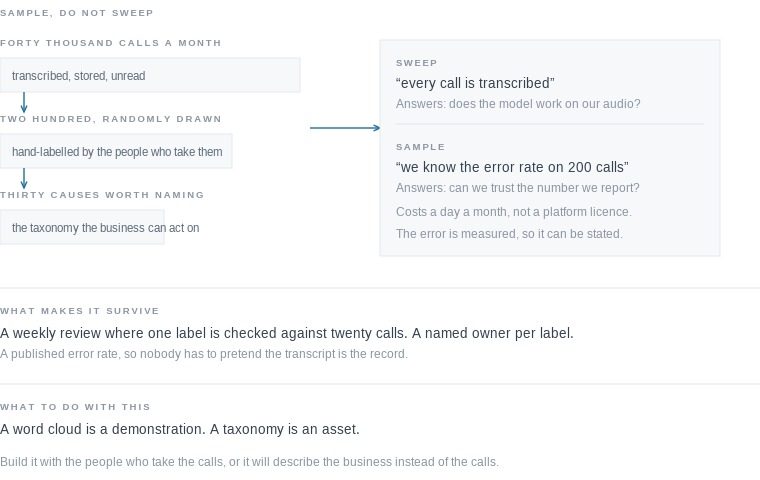
Sample, do not sweep
Accuracy is usually about getting every call right. Usefulness is about knowing the error rate on a sample and living with it. A stratified sample of two hundred calls, hand-labelled, tells you whether the machine agrees with the team about eight out of ten — and that is enough to act on, provided you say so on the page.
Full coverage is worth paying for only where the output feeds a control, such as a compliance check that must be provable per call.
What makes it survive
Three things, none of them technological. A weekly review where one label is examined against twenty calls. A named owner for the taxonomy, so changes are versioned rather than drifted. And one decision per quarter that the analysis actually changed.
If the programme cannot point to the decision, it is not analytics. It is a very expensive way to listen.

Working through this now?


